

CROSS COUNTRY

Il Volo a Vela Cross‑Country – L’Arte di Viaggiare con l’Aria

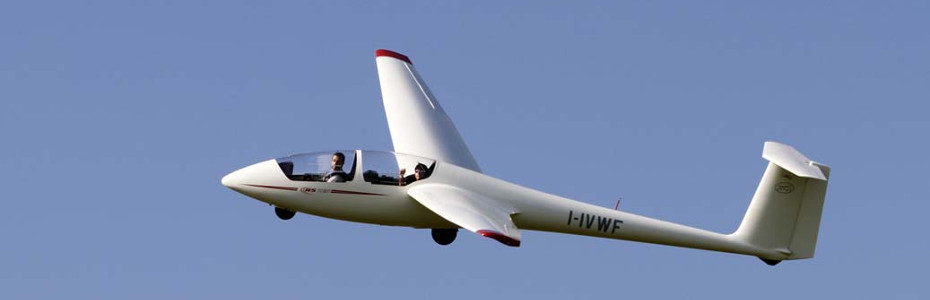
Il volo a vela cross‑country non è semplicemente “andare lontano con un aliante”.
È un’esperienza che unisce istinto, lettura dell’atmosfera, gestione dell’energia e un senso profondo di libertà. È un viaggio senza motore, in cui l’unica forza propulsiva è l’ingegno del pilota e la vita nascosta dell’aria.

Decollato da un aerodromo, il pilota si allontana dal circuito locale e inizia un percorso che si estende per decine, spesso centinaia di chilometri. Non ha un motore da accendere in caso di difficoltà: deve trovare l’energia. E lo fa interpretando il cielo come un navigatore interpreta una carta nautica.

Ogni termica diventa un porto sicuro; ogni cumulo un possibile alleato; il terreno sotto di lui non è sfondo, ma una mappa viva che racconta dove l’aria sale e dove discende. Il pilota impara a leggere campi arati, creste, crinali, vigneti, boschi, laghi: tutti elementi che influiscono sul comportamento delle masse d’aria.
È un continuo gioco di comprensione e anticipazione.

Nel cross‑country la velocità non è il vero obiettivo: lo è la continuità del volo.
Si sale in termica, si “carica energia”, si parte in planata e si cerca il prossimo punto di sollevamento. Ogni decisione è un equilibrio tra ambizione e prudenza, tra la voglia di andare oltre e la necessità di mantenere un margine di sicurezza. È una danza lenta e ragionata, ma allo stesso tempo emozionante come una lunga navigazione a vela in mare aperto.

Dal punto di vista tecnico, il pilota deve allenare:

  • la gestione dell’energia totale (quota + velocità),
  • il rispetto dell’inviluppo di volo del proprio aliante,
  • la pianificazione della rotta e delle possibili aree di atterraggio,
  • la capacità di decidere rapidamente e correggere l’errore prima che diventi irreversibile,
  • il mantenimento della consapevolezza situazionale anche quando il vento cambia o la giornata “si spegne”.

Ma la verità è che il cross‑country è fatto soprattutto di sensazioni:
il silenzio rotto solo dal sibilo delle ali, la salita che improvvisamente accelera mentre ci si infila nel “cuore” della termica, la planata lunga e stabile verso un nuovo cumulo, il paesaggio che scorre lento sotto l’aliante come se lo si sfiorasse con le dita.

E poi c’è la soddisfazione finale: tornare a casa senza aver mai acceso un motore, con la consapevolezza di aver percorso grandi distanze soltanto grazie al proprio intuito e alla propria capacità di entrare in sintonia con l’aria.
È questo che rende il volo a vela cross‑country un’arte: la capacità di trasformare il cielo in una strada, e l’atmosfera in un alleato.

Cross‑Country Soaring – The Art of Traveling with the Air

Cross‑country soaring is far more than simply “going far in a glider.”
It is an experience that blends instinct, atmospheric awareness, energy management, and a profound sense of freedom. It is a journey without an engine, where the only source of propulsion is the pilot’s skill and the living dynamics of the sky.

Once departing the home airfield, the pilot leaves the familiar pattern behind and begins a route that may stretch for dozens—or often hundreds—of kilometers. With no engine to rely on, the pilot must find energy in the atmosphere, reading the sky the way a sailor reads the sea.

Every thermal becomes a safe harbor; every cumulus cloud a potential lift source. The landscape below is not just scenery but a living map filled with clues: plowed fields, ridges, vineyards, forests, lakes—each influencing how the air rises or sinks.
Soaring cross‑country is a constant game of interpretation and anticipation.

In this type of flying, speed is not the real objective; continuity of flight is.
The pilot climbs in lift to “charge energy,” glides forward searching for the next source, and weighs each decision between ambition and prudence. It is a careful, thoughtful dance—with the quiet thrill and sense of exploration found in long‑distance sailing.

From a technical perspective, cross‑country soaring requires the pilot to refine:

  • management of total energy (altitude + airspeed),
  • adherence to the glider’s flight envelope,
  • route planning and awareness of potential landing fields,
  • fast decision‑making when conditions begin to change,
  • continuous situational awareness throughout the flight.

But above all, cross‑country soaring is about sensations:
the whisper of the airflow over the canopy, the surge of the climb when the glider finds the “heart” of the thermal, the long, quiet glide toward a distant cumulus, the landscape scrolling softly beneath as though you could touch it with your fingertips.

And then comes the final satisfaction: returning home without ever starting an engine—knowing you have traveled great distances using only your intuition, your aeronautical judgment, and your ability to connect with the air.
This is what makes cross‑country soaring a true art: the ability to turn the sky into a pathway, and the atmosphere into your strongest ally.